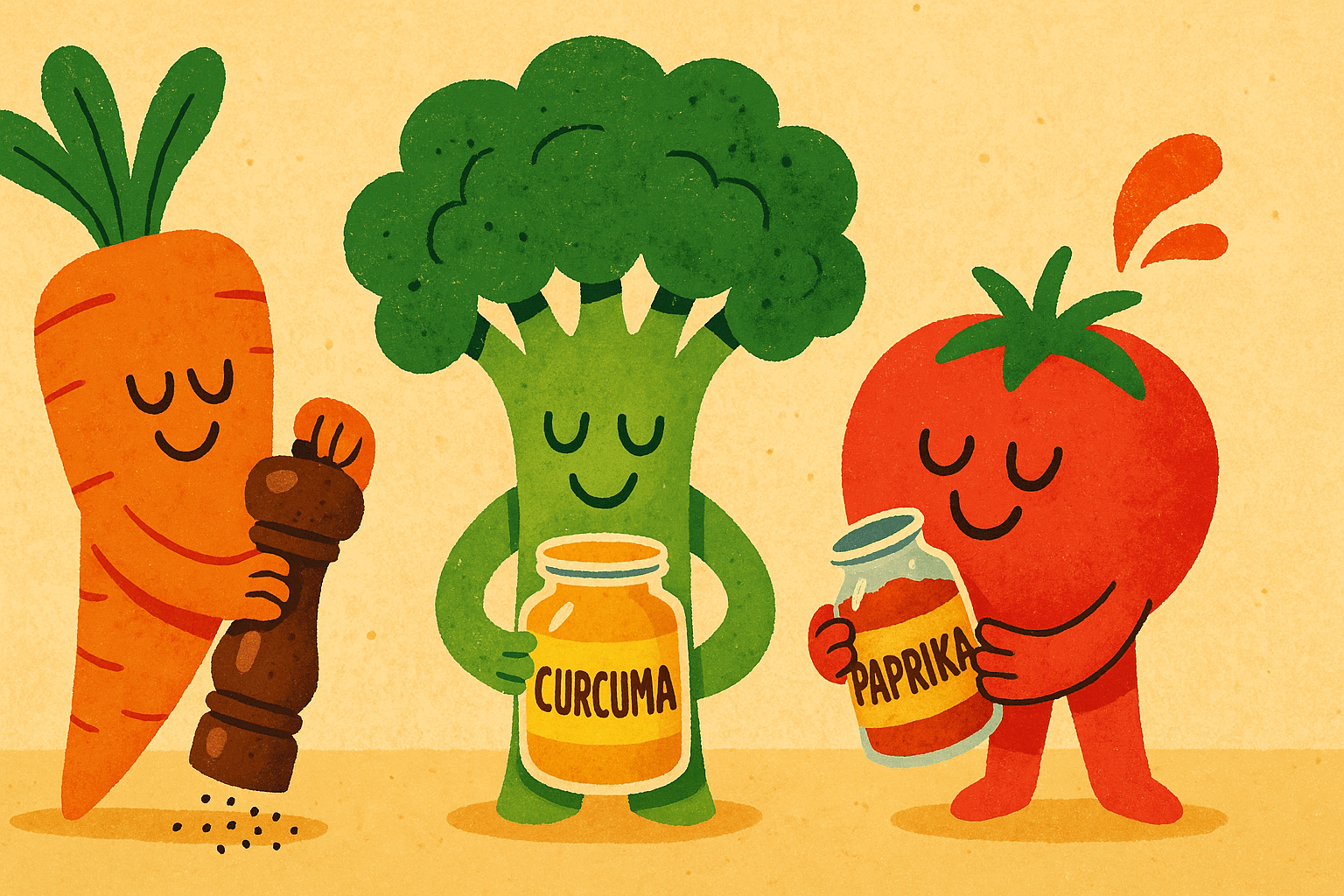
Essential Spices and Herbs for Flavorful Veggie Cooking
Good seasoning is often what separates a bland vegetarian dish from a meal you actually want to cook again. Spices and herbs cost almost nothing, keep for a long time, and turn the same base of vegetables or legumes into dozens of different plates. This article explains the difference between an herb and a spice, how to pair and store them, what the science really says about their health effects, and how to use them to eat less salt without losing flavor.
The short version
- Herb or spice? An herb is mostly the leafy or flowering part of a plant (basil, parsley, thyme), fresh or dried. A spice comes from another part: a seed, bark, root, or flower bud (cumin, cinnamon, ginger, cloves).
- The best health benefit is indirect. A spoonful of turmeric or ginger does not cure anything on its own. But well-judged herbs and spices let you cut back on salt: the WHO recommends staying under 5 g of salt per day for adults, and swapping some of that salt for aromatics is a concrete way to get there.
- Be wary of promises. For both turmeric and ginger, there is no solid clinical evidence of a disease-fighting effect; curcumin is also poorly absorbed by the body. Cook with them for pleasure and variety first, not as medicine.
- Fresh at the end, whole for storage: add fresh herbs last, keep spices whole when you can, and dry-toast them to release their aromas.
To go further on specific families, see our homemade spice blends guide and our tips for seasoning without salt.
1. Why are spices and herbs so important in vegetarian cooking?
There are many reasons why spices and herbs are essential in preparing vegetarian dishes:
-
Enhancing flavor: Vegetarian dishes can sometimes lack flavor if care is not taken to enhance their potential. Spices and aromatic herbs not only add taste but also personality to each plate.
-
Variety of pleasures: The vegetarian world is full of fruits, vegetables, legumes, and grains. Spices allow you to transform the same ingredient in multiple ways, thus avoiding monotony.
-
A real but indirect health role: some spices contain compounds studied in the lab (such as curcumin in turmeric or gingerols in ginger). Stay cautious: to date there is no solid clinical evidence that eating them cures any disease. Their real everyday value lies elsewhere. By adding flavor, they let you use less salt, eat more vegetables and legumes, and vary your diet, which is exactly what the WHO recommends.
-
Rediscovering the roots of world cuisine: spices are often associated with the identity of a region or country. By using them, you embark on a discovery of different culinary traditions worldwide, without leaving home.
The key lies in choosing the right spices for each preparation and knowing the ideal combinations to achieve a balance between various flavors.
Herb or spice: what’s the difference?
The two terms often get mixed up, but the distinction is simple and useful in the kitchen. An herb is the leafy or flowering part of a plant, used fresh or dried: basil, parsley, thyme, rosemary, cilantro. A spice comes from another part of the plant, usually dried: a seed (cumin, coriander seed, fenugreek), bark (cinnamon), a root or rhizome (ginger, turmeric), a flower bud (cloves), or a fruit (pepper, chili). This difference has practical consequences: herbs are more fragile and go in at the end of cooking to keep their freshness, while spices tolerate heat and even benefit from being toasted or simmered.
2. Overview of essential spices and herbs
In this section, we will explore some of the essential spices and herbs in vegetarian cooking. Of course, the list is far from exhaustive. However, these few elements will provide a solid starting point to begin or perfect your flavor repertoire.
2.1 Aromatic herbs
Aromatic herbs are often more subtle than spices and are added at the end of cooking or even raw, to preserve all their freshness.
-
Basil: This is the flagship herb of Italian cuisine. Its fresh and slightly sweet aroma pairs particularly well with tomatoes and Mediterranean vegetables. It can be used in sauces, salads, and soups, or even in pesto.
-
Parsley: Widely used in world cuisines, it can be flat or curly. Parsley adds a fresh and light note and suits most dishes: salads, raw vegetables, tabbouleh, soups, egg-free omelets (based on silken tofu), or vegetable fried rice.
-
Cilantro: Its finely chopped leaves give an exotic touch to your recipes, especially those inspired by Asian, Mexican, or Indian cuisine (curries, sauces, chickpea-based salads, etc.). Its slightly lemony taste is particularly appreciated with stir-fried vegetables or in salsas.
-
Thyme: Essential in Mediterranean cuisine, thyme, whether fresh or dried, enhances roasted vegetables, soups, and tomato-based sauces. It is also used in marinades for tofu or tempeh.
-
Rosemary: Its pronounced fragrance pairs wonderfully with potatoes, mushrooms, and most roasted vegetables. Perfect for adding a resinous and fragrant note to vegetarian grills (tofu, grilled eggplants, etc.).
-
Oregano: A staple in Italian and Greek cuisine, oregano is mainly used dried. It accompanies tomato sauces, vegetarian pizzas, and preparations with peppers and sun-dried tomatoes.
-
Tarragon: Recognizable by its slight anise flavor, tarragon is excellent with creamy sauces made from soy or vegetable cream, in tofu marinades, or with mushrooms.
2.2 Mild spices
So-called “mild” spices are not necessarily sweet, but they have a warm and enveloping aroma without being too spicy.
-
Cinnamon: Highly appreciated in pastries and desserts, cinnamon can also be invited into savory dishes. It pairs well with sweet and savory dishes, especially those including squash, carrots, or legumes like chickpeas in vegetarian tagines.
-
Turmeric: Easily recognizable by its yellow-orange color, turmeric is a key ingredient in Indian and Asian cuisine. It owes its color to curcumin, often cited for its antioxidant properties. Be careful with shortcuts, though: clinical studies have not shown a clear disease-fighting effect, and curcumin is poorly absorbed by the body. Its discreet taste lets you add it to many recipes such as curries, soups, sauces, or stir-fried vegetables. One practical note: powdered turmeric has sometimes been adulterated (lead-based coloring added in some supply chains), so it pays to buy a trusted brand. To dig deeper, see our article on the power of anti-inflammatory spices.
-
Paprika: Paprika comes from sweet peppers and is available in different intensities, from mild to spicy. It adds a lovely red color and a sweet, fruity flavor. It is perfect with eggplant-based dishes, lentil stews, or sprinkled on grilled vegetables.
-
Cinnamon and cumin: As an indication, this combination of cinnamon and cumin is common in Middle Eastern and North African cuisines. Their complementarity warms dishes based on chickpeas, zucchini, and tomatoes.
2.3 Strong spices
So-called “strong” or “spicy” spices should be used sparingly, especially if you are not a fan of spicy dishes. However, their presence can give your preparations an unforgettable character.
-
Chili (powder, flakes, or fresh): Whether it’s chili powder, cayenne pepper, or jalapeño pepper, it adds a touch of heat and character. To make a successful chili sin carne, don’t hesitate to combine chili powder with other spices like cumin, oregano, or smoked paprika.
-
Ginger: Used fresh, dried, or candied, ginger adds a spicy and slightly lemony touch. Ideal for Asian dishes (vegetable stir-fries, soups, sauces), but also to spice up a vinaigrette or a detox juice.
-
Black pepper: Although very common, black pepper is a must-have. It lifts existing flavors and contains piperine, a compound that markedly increases the absorption of turmeric’s curcumin under experimental conditions. That’s why Indian cooking often pairs pepper with turmeric. Freshly ground at the last moment, it is far more fragrant than pre-ground supermarket pepper.
2.4 Spice blends
Spice blends are a significant time saver for adding a foreign touch to your dishes.
-
Garam masala: An Indian blend often including cumin, coriander, black pepper, cardamom, cinnamon, and sometimes cloves. Perfect for vegetable and lentil curries or in vegetarian samosas. To build your own versions, see our homemade spice blends guide and our tips for measuring spices in homemade curries.
-
Ras el-hanout: Originating from the Maghreb, this blend can contain up to fifteen different spices like cinnamon, ginger, pepper, turmeric, and nutmeg. Ideal for flavoring couscous, vegetarian tagines, and vegetable soups.
-
Curry (powder or paste): Infinite variations depending on the origin (Indian, Thai, etc.). Generally composed of coriander, cumin, turmeric, fenugreek, and chili, it perfectly accompanies various vegetables, legumes, or tofu.
-
Herbes de Provence: A well-known blend in Europe, including thyme, rosemary, oregano, and sometimes savory. It instantly enhances grilled or roasted vegetables and pairs well with vegetarian gratins.
3. Tips for pairing spices and herbs
Creating harmonious flavor pairings can be tricky. Here are some key points to remember:
-
Start with moderation: It’s better to underestimate the amount of spices and herbs initially rather than overdo it and ruin a dish. You can always adjust at the end of cooking.
-
Dare complementary blends: Some spices enhance each other. For example, black pepper boosts turmeric, cumin, and cinnamon form a perfect association. Don’t hesitate to test different combinations.
-
Consider aromatic strength: Fresh herbs release more subtle aromas. Toasted spices (dry-roasted before consumption) can amplify their fragrance. Keep this in mind when determining the amount used.
-
Use neutral bases for testing: If you want to practice recognizing each spice and herb, cook a plain grain (rice, quinoa, barley, etc.) and add only a pinch of spice or an herb. This way, you’ll know exactly what flavor it brings before incorporating it into a more complex recipe.
4. What science says (and doesn’t say) about their health effects
Spices and herbs carry a “superfood” reputation that needs tempering. Here is what holds up and what doesn’t.
The main benefit is eating less salt. The WHO recommends limiting salt to less than 5 grams per day for adults, because excess sodium is a risk factor for high blood pressure, and most people go over that limit. Replacing part of the salt with fresh herbs, spices, garlic, lemon juice, or citrus zest is one of the few genuinely effective ways to cut sodium without leaving dishes bland. It’s also what makes a diet rich in vegetables and legumes tasty enough to stick with over time. Our guide to seasoning without salt covers the method.
Turmeric is not a medicine. Curcumin is heavily studied, but literature reviews show no reliable clinical evidence of an effect against disease. It is also unstable and poorly absorbed, which limits its pharmacological value. Pairing turmeric with black pepper improves curcumin absorption (thanks to piperine), but that doesn’t turn a spice into a treatment. Worth noting too: high-dose curcumin supplements have been linked, in rare cases, to liver injury. Turmeric used in cooking, at culinary doses, doesn’t raise this concern.
Ginger: a plausible, limited effect. Ginger may help with nausea, especially nausea and vomiting in pregnancy, where it beats placebo in several studies. Evidence is weak or absent for other uses (chemotherapy nausea, osteoarthritis pain). It’s a worthwhile spice, to be enjoyed for its taste without expecting miracles.
Antioxidants and micronutrients: mind the quantities. Many herbs and spices (turmeric, basil, oregano, parsley) are rich in antioxidant compounds and micronutrients such as vitamin K in parsley. But we eat them in very small amounts: a pinch of thyme or a few sprigs of parsley won’t deliver the same benefits as a serving of leafy greens. Treat them as a bonus, not a main source of nutrients.
Digestion and comfort. Ginger, cumin, and mint are traditionally used to support digestion and reduce bloating. The data are mostly empirical, but these uses are old and carry no risk at culinary doses. Our article on herbal teas and spices for digestion goes further.
A word of caution. Too much hot spice can irritate the stomach in sensitive people or those with reflux. Some very concentrated spices (in supplement form) also interact with medications. In cooking, at usual amounts, the risk is low, but balance remains the rule.
5. How to store and use your spices and herbs?
To best preserve the aromas and properties of your spices and herbs, a few rules apply:
-
Store away from air, light, and humidity: Use airtight glass jars, place them in a closed, dry cupboard. Ground spices lose their flavor more quickly, so prefer storing whole spices when possible.
-
Use fresh herbs at the end of cooking: To preserve all their freshness and fragrance, add your fresh herbs (cilantro, parsley, basil) at the end of cooking or just before serving.
-
Dry roasting for certain spices: Before grinding or adding them to a recipe, some spices like cumin or coriander can be dry-roasted for a few moments in a hot pan. This amplifies their aromas.
-
Pay attention to shelf life: Dried spices and herbs can be stored for several months, even a year, but gradually lose intensity. Don’t hesitate to renew your stock regularly, especially if you notice their fragrance fading.
-
Washing and drying fresh herbs: Before consuming, gently rinse your herbs under a stream of water to remove any impurities, then dry them with a clean cloth or paper towel. To enjoy them longer, you can also freeze them (chopped or whole) in ice cube trays with a little olive oil.
6. Some tasty recipe ideas
Let’s get to the heart of the matter with some simple recipe ideas where spices and herbs play a major role. For other fragrant bases, see our quick marinades for tofu and tempeh and our article on the art of homemade curry.
6.1 Vegetable Curry with Coconut Milk
-
Ingredients:
- 1 sliced onion
- 2 minced garlic cloves
- 1 tablespoon vegetable oil
- 2 tablespoons curry paste (or 2 teaspoons curry powder)
- 1 teaspoon turmeric
- 200 ml coconut milk
- 1 red bell pepper, sliced
- 2 carrots, sliced
- 1 zucchini, diced
- 100 g cooked chickpeas
- Salt and pepper to taste
- A bit of fresh cilantro for garnish
-
Preparation:
- Sauté the onion and garlic in vegetable oil. Add the curry paste or powder and turmeric.
- Incorporate the vegetables (bell pepper, carrots, zucchini) and sauté for a few minutes.
- Pour in the coconut milk and let simmer for about 15-20 minutes until the vegetables are tender.
- Add the cooked chickpeas, season with salt and pepper. Adjust seasoning if necessary.
- Serve with basmati rice, and sprinkle with fresh cilantro.
6.2 Roasted Vegetables with Herbes de Provence
-
Ingredients:
- 3 potatoes, cut into large cubes
- 2 carrots, cut into sticks
- 1 eggplant, sliced
- 2 tablespoons olive oil
- 1 tablespoon Herbes de Provence
- Salt and pepper to taste
-
Preparation:
- Preheat your oven to 200°C.
- In a bowl, mix the vegetables with olive oil, Herbes de Provence, salt, and pepper.
- Spread the vegetables on a baking sheet lined with parchment paper and bake for 30 to 40 minutes, stirring halfway through.
- It’s ready when the vegetables are golden and tender. You can serve them with a green salad or grilled tofu.
6.3 Chickpea Tagine with Ras el-hanout
-
Ingredients:
- 1 sliced onion
- 2 minced garlic cloves
- 1 tablespoon olive oil
- 2 teaspoons Ras el-hanout
- 2 carrots, sliced
- 1 zucchini, sliced
- 2 tomatoes, diced
- 200 g cooked chickpeas
- 200 ml vegetable broth
- 1 cinnamon stick (optional for a sweet note)
- Salt, pepper
- Fresh cilantro or parsley for garnish
-
Preparation:
- Sauté the onion and garlic in olive oil. Then add the Ras el-hanout and mix well.
- Incorporate the carrots, zucchini, and tomatoes. Pour in the vegetable broth and place the cinnamon stick.
- Let simmer on low heat for about 25 minutes. Add the chickpeas in the last 5 minutes to warm them and finish cooking.
- Season with salt and pepper, remove the cinnamon stick. Sprinkle with fresh cilantro or parsley just before serving.
- Accompany your tagine with couscous or pita bread.
7. Additional tips and advice
-
Make your own blend: If you enjoy a particular combination, don’t hesitate to make your own spice blend and store it in a jar. You’ll have a personalized mix always at hand.
-
Hydrate certain spices: Some spices like saffron or dried chili can be rehydrated in a little hot water before being added to a recipe, to release more flavor.
-
Want a creamy effect: In curries, sauces, or soups, adding vegetable cream (soy, oat, or coconut) can soften strong spices and provide a creamy texture.
-
Don’t hesitate to taste and adjust: The best way to succeed with your seasoning is to taste regularly as you prepare. Spices release their aromas when cooking, but you should never wait until the end of the recipe to check if you’ve added enough or too much.
-
Respect the seasonal cycle: Using herbs and spices suited to seasonal recipes allows you to follow the natural rhythm of products. In spring and summer, lean more towards fresh notes (parsley, basil), while in autumn and winter, opt for warming spices (ginger, cinnamon).
8. Conclusion
Spices and herbs are the best-value tool in vegetarian cooking: a small budget, a long shelf life, and an almost infinite range of flavors from the same base ingredients. Their most solid health benefit isn’t being remedies, but making a diet rich in vegetables and low in salt enjoyable.
To recap:
- Distinguish herbs (leaves, added at the end of cooking) from spices (seeds, barks, roots, which tolerate heat).
- Get familiar with a few essentials (cumin, turmeric, basil, pepper) and learn to pair them.
- Use aromatics to eat less salt, aiming for the WHO’s recommended under 5 g of salt per day.
- Keep a critical eye on health claims: turmeric and ginger are cooked for pleasure, not as medicine.
- Store your spices away from air and light, whole when possible.
Over to you: start simple, taste often, and let curiosity guide your blends.
FAQ
Is turmeric really anti-inflammatory? Curcumin, its active compound, has anti-inflammatory effects in the lab, but clinical studies have not shown a reliable benefit against disease in humans. It is also poorly absorbed. Turmeric remains an excellent cooking spice; it does not replace treatment.
Should I add black pepper to turmeric? Yes, if you want to maximize curcumin absorption: the piperine in pepper increases it markedly in studies. It’s a classic reflex in Indian cooking anyway, and it improves the taste. But don’t rely on it for a medical effect.
Does ginger help with nausea? There is reasonable-quality evidence for nausea and vomiting in pregnancy, where ginger beats placebo. For other situations the evidence is weak. If you are pregnant or on medication, ask a health professional before taking it in large amounts or as a supplement.
Fresh or dried herbs: which to choose? Both have their place. Fresh herbs (basil, cilantro, parsley) are at their best added at the end of cooking or raw. Dried herbs (oregano, thyme, rosemary) hold up better in long cooking and are used in smaller amounts, since their aroma is more concentrated.
How do I replace salt with spices? Combine several flavor levers: fresh herbs, toasted spices, garlic and onion, citrus juice and zest, a touch of acidity (vinegar), and sometimes chili. That’s the best way to stay under the WHO’s 5 g of salt per day. Our article on seasoning without salt gives ready-to-use combinations.
How long do spices keep? Ground spices hold their intensity six months to a year, whole spices several years. Trust your nose: if a spice barely smells of anything, it won’t flavor your dish. Buy in small amounts and renew regularly.
Sources
- WHO – Healthy diet (fact sheet): less than 5 g of salt per day, at least 400 g of fruits and vegetables, limiting free sugars.
- NCCIH (NIH) – Turmeric: Usefulness and Safety: state of the evidence, bioavailability, safety, and supplement-linked liver injury.
- NCCIH (NIH) – Ginger: Usefulness and Safety: evidence on pregnancy nausea, limits of other uses, and precautions.
- Wikipedia – Turmeric: no high-quality clinical evidence of a disease-fighting effect, lead adulteration.
- Wikipedia – Curcumin: poor bioavailability, no established medical use, rare cases of liver injury linked to supplements.
- Wikipedia – Piperine: role of black pepper’s piperine in curcumin absorption.
- Wikipedia – Ginger: possible effect on pregnancy nausea, limited evidence for other uses.
- Wikipedia – Herb and Spice: the distinction between herbs and spices.