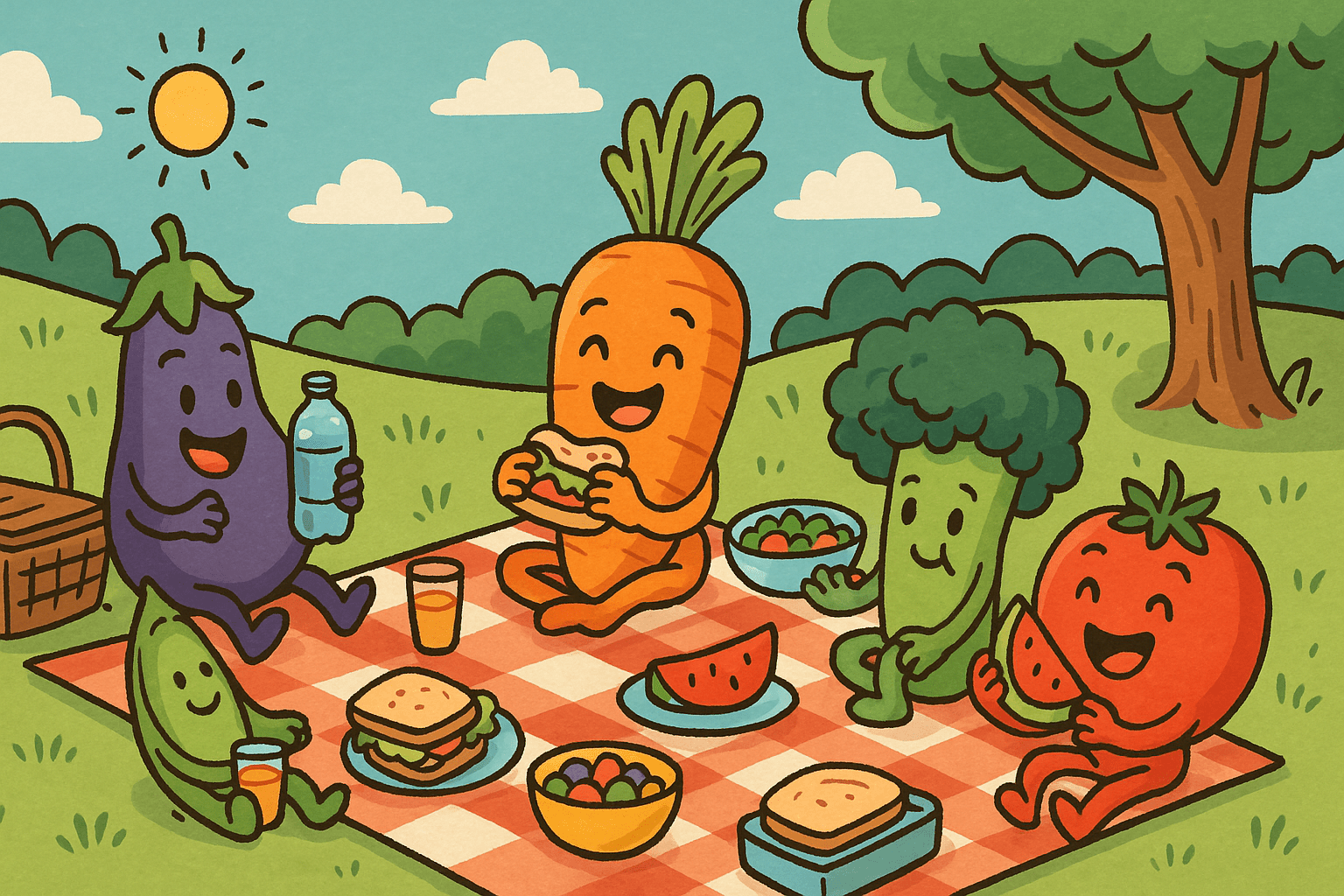
Lakeside BBQ: How to Run a Zero Waste Picnic
A vegetarian barbecue by a Swiss lake needs three things sorted before the fun starts: check what your canton currently allows regarding open fires, keep the cold chain intact for the whole trip, and pack enough containers to leave nothing behind. This guide focuses on the points where lakeside barbecues actually go wrong, with the official guidance that applies to each.
The short version
- Open-fire rules are cantonal. The federal portal waldbrandgefahr.ch states that the Federal Office for the Environment informs and warns together with the cantons, but that cantonal regulations are the ones that count. Check them before you leave, especially during dry spells.
- The cold chain is the real risk at a picnic. The FDA advises refrigerating perishable food within two hours, or within one hour when the outside temperature is above 90 °F (32 °C).
- A vegetarian grill avoids one problem specific to meat: according to the National Cancer Institute, heterocyclic amines form from creatine found in muscle and are not found in significant amounts in foods other than meat cooked at high temperatures. Polycyclic aromatic hydrocarbons are different: they come from smoke, and any fat dripping onto hot coals produces them, including an oily marinade.
- Eating local matters less for climate than most people assume. Our World in Data reports that transport accounts for roughly 5% of food system emissions: what is on the plate matters more than how far it travelled.
- Food waste, on the other hand, matters a lot. The Swiss Federal Office for the Environment puts national food losses at 330 kilos per person per year. Cooking the right amount and taking leftovers home is the highest-value zero waste move of the day.
- Never use a barbecue inside a tent, a closed shelter or under a sealed canopy. The NHS explicitly lists this among the causes of carbon monoxide poisoning.
What “zero waste” actually means by the water
The phrase has turned into a slogan, which makes it vague. In practice it covers three separate goals worth keeping apart.
The first is leaving nothing on site. That is the legal minimum and the one non-negotiable point: packaging, cigarette butts, bottle caps, leftover charcoal. Switzerland ranks among the countries producing the most municipal waste per inhabitant worldwide, and lake shores collect a very visible share of summer littering.
The second is producing less waste in the first place, before any question of sorting. A crate of reusable tableware and a few airtight boxes remove most of the volume: paper plates, cling film, single-use bags, plastic cutlery.
The third, broader goal concerns the footprint of the meal itself. This is where intuition misleads people most, so it deserves some detail.
Where the environmental impact actually sits
The idea that food miles drive a meal’s footprint is widespread and largely wrong. The data compiled by Our World in Data show that food production accounts for around 26% of global greenhouse gas emissions, that supply chains in the broad sense (processing, transport, packaging, retail) account for about 18% of food emissions, and that transport alone accounts for roughly 5%. Air freight, which is genuinely carbon-heavy, covers only a tiny slice of volumes: about 0.16% of food miles.
In practice, what the food is matters more than where it came from. That is exactly the advantage of a vegetarian barbecue: it shifts the meal towards low-footprint categories without any extra effort.
None of this makes buying local pointless. Buying from a nearby grower cuts packaging, supports a farm, and gets you vegetables picked at maturity. Just describe it accurately: it is a choice about quality, freshness and the local economy more than a major climate lever. If you want the same logic applied to protein, we go into it in cooking local legumes to cut your carbon footprint.
The lever that genuinely moves the needle at household scale is waste. Three hundred and thirty kilos per person per year is the Swiss order of magnitude, and an oversized picnic is a textbook contribution. Counting portions and packing return containers beats buying any eco-labelled accessory.
Before you go: the legal side and the site
Fire, grills and bans
In Switzerland, authority over open fires sits with the cantons and sometimes the municipalities. The federal portal waldbrandgefahr.ch publishes the current danger level and states that cantonal rules are decisive. During a dry summer, absolute bans can appear within days, including for built fire pits and portable grills.
Three checks are enough: the published danger level, any cantonal or municipal ban currently in force, and the site’s own rules, since some protected shorelines, nature reserves and public beaches ban fires regardless of the danger level.
An electric grill changes the legal picture in some situations, but not everywhere, and it needs a power socket. If that interests you for other reasons, we compared models in choosing an electric barbecue for greener grilling.
Picking a spot
An existing fire pit almost always beats a grill set on grass: the ground is already bare, the spread risk is lower, and the ashes have somewhere to go. Check whether bins and recycling containers exist, knowing they routinely overflow in high season. Plan to carry everything home anyway.
Keep sensible distance from dry vegetation, reeds and trees. Have something to extinguish with. A bucket of lake water works fine, but you need to have filled it before you need it.
The cold chain: the real picnic risk
This is the point people skip most often, and the only one that sends anyone to hospital. The WHO notes that foodborne illness affects roughly one in nine people worldwide each year and causes 1.52 million deaths, and that some pathogens such as Listeria grow even at refrigeration temperatures.
Practical benchmarks:
- Your fridge should sit at 4 °C or below, and dishes should cool down in it before you leave. A potato salad packed while still lukewarm warms up everything else in the cooler.
- Two hours out of refrigeration at most, one hour above 32 °C, per the FDA. That clock includes the journey, not just the time on the blanket.
- Use ice packs and fill the cooler. A full cooler holds cold far better than a half-empty one. Put the most sensitive dishes in direct contact with the packs.
- Bring two coolers if you can: one for drinks, opened often, and one for food, opened as little as possible.
- Keep the cooler in the shade under a damp towel rather than in a car boot in full sun.
The most sensitive items are dairy-based dishes, egg-based dishes, opened tofu, cooked starch salads and yoghurt dressings. Hummus, whole raw vegetables and dry bread are far more forgiving.
Who needs a wider margin
The WHO and the FDA flag the same groups: pregnant women, young children, older adults and immunocompromised people. For them, keep the safety margin generous: no dish that has been sitting warm for hours, no leftovers eaten the following day, and a preference for food served either properly hot or properly cold.
If digestive symptoms show up after the meal, the NHS emphasises drinking fluids to avoid dehydration and lists the signs that warrant medical advice: diarrhoea lasting more than seven days, vomiting for more than two days, blood in the stool, or dehydration that persists despite oral rehydration sachets.
Hygiene without running water
The WHO’s five keys to safer food each fit in a sentence: keep clean, separate raw and cooked, cook thoroughly, keep food at safe temperatures, and use safe water and raw materials. By a lake, two of them need a bit of planning.
For hands, bring a dedicated bottle of drinking water and soap. The FDA recommends washing for twenty seconds. Hand sanitiser is a fallback, not a replacement, especially once hands are greasy or visibly dirty.
For water, do not rely on the lake, however clear it looks. It is for dousing coals, not for rinsing salad or washing hands before a meal. Wash and scrub fruit and vegetables at home under running tap water, including items whose skin you will not eat, as the FDA advises.
Pack a clean board and knife in a closed box rather than chopping on a towel spread over the sand.
Grilling without meat: what the heat actually does
Plenty of articles claim barbecues “produce carcinogens” without saying which ones or where they come from. The distinction is genuinely useful.
Heterocyclic amines form when amino acids, sugars and creatine react at high temperature. The National Cancer Institute specifies that creatine comes from muscle, and that these compounds are not found in significant amounts outside meat cooked hot. A grill loaded with vegetables and tofu therefore does not produce them.
Polycyclic aromatic hydrocarbons are a different story: they come from smoke. When fat drips onto the heat source it burns, and the smoke deposits these compounds on the food surface. A skewer generously brushed with oil can produce them. Two habits limit this: drain marinades before the food hits the grate, and control flare-ups by moving the food rather than dousing the coals.
The third compound concerns starches. The EFSA notes that acrylamide forms in starchy foods above 120 °C at low moisture through the Maillard reaction, and that its risk assessment concluded acrylamide potentially increases cancer risk for consumers in all age groups. At a barbecue that means potatoes, corn, bread and grain patties: aim for golden, not black, and cut away charred parts.
The National Cancer Institute adds an honest caveat: population studies have not established a definitive link between dietary exposure to these compounds and human cancer, partly because real exposure is hard to measure. So this is not a reason to abandon the grill, only a reason to stop burning food routinely.
What to put on the grate
Vegetables
Courgettes, aubergines, peppers, onions, mushrooms and tomatoes handle direct heat well. Dense vegetables such as potatoes, carrots, beetroot and squash need par-cooking at home, which has the side benefit of shortening grill time and fuel use on site.
The claim that seasonal vegetables are automatically more nutritious is too sweeping to state as fact: nutrient content depends on variety, soil, ripeness at harvest and storage time. What seasonality reliably delivers is better value and produce picked closer to maturity. To plan shopping along those lines, see adapting vegetarian meals to the seasons.
Plant proteins
Firm or extra-firm tofu holds up on a grate; silken tofu does not. Press it for twenty to thirty minutes to drive off water, otherwise it sticks. Tempeh benefits from ten minutes of steaming first: this softens its bitterness and stops it drying out. Seitan, rich in wheat gluten, holds together well but dries quickly, so favour indirect heat.
Homemade legume patties fall apart on an open grate. A cast-iron plate or a plancha set on the grill solves that. We cover the technique in plancha: vegetables, tofu and caramelised fruit.
On overall balance, the NHS notes that pulses, eggs, nuts, seeds, tofu and fortified soya alternatives are the reference protein sources in a vegetarian diet, and that fruit and vegetables count as five 80 g portions a day. A vegetarian barbecue clears that bar easily, provided you do not live on bread and dips.
Four dishes that travel well
Marinated vegetable skewers
Cut courgette, aubergine, pepper and onion into even two-centimetre cubes, otherwise cooking will be uneven. In a jar, mix olive oil, lemon juice, minced garlic, salt, pepper and herbs. Marinate in the fridge for one to two hours, never at room temperature. Drain before grilling, then allow a few minutes per side over medium heat. Use stainless steel skewers: they wash clean, do not burn, and skip the soaking step wooden ones need.
Yakitori-style marinated tofu
Soy sauce, maple syrup, sesame oil, grated ginger and a little chilli. Marinate in the fridge for at least two hours, ideally overnight. The sugar caramelises fast, so cook over moderate heat and brush only towards the end, otherwise you end up with a black, bitter crust. A marinade that has touched raw tofu should not be served as a sauce unless it has been brought to a boil. Other bases are covered in marinade techniques for tofu and tempeh.
Cauliflower steaks
Cut two-centimetre slices from the middle of the head, otherwise they fall apart. Paprika, garlic powder, cumin, salt and oil are enough. Start over indirect heat to cook the core, finish over direct heat for colour. The florets that break off go into a salad rather than the bin.
Salads that survive the heat
Grain and legume salads hold up far better than leaf salads: tabbouleh, lentil salad, quinoa with chickpeas. Add acidic dressing just before serving so raw vegetables do not weep. To build these into filling plates, see creating a complete, satisfying meal salad and combining grains and legumes effectively.
On dips: hummus and oil-based sauces travel well in jars. Guacamole browns within hours, and a yoghurt dressing copes badly with heat, so make those last or keep them touching the ice packs. Our piece on batch cooking summer sauces has more stable options.
Drinks
Refillable bottles of tap water remove most drink-related waste. Infused water with citrus, cucumber or berries can be prepared in a jar, but it contains raw plant matter, so treat it as fresh food and keep it cold.
Homemade iced tea travels in a thermos. For alcohol, glass that can be returned or recycled is the easiest to carry home, and alcohol in full sun speeds up dehydration, which does not help anyone supervising a fire.
Reusable kit and washing up
A sturdy tableware crate solves most of it: stainless or enamel plates, metal cutlery, unbreakable glasses, cloth napkins. Stainless travels without breaking and washes in cold water, which matters when there is no sink. Glass jars carry sauces out and leftovers back.
The part people get wrong is washing up. Never wash dishes in the lake, and do not tip soapy water on the shore, even with a product labelled biodegradable: dilution in a water body is not instant and grease residues end up in the water. The cleanest approach is to scrape plates into a bag, stack them in a closed basin and wash at home. If you must wash on site, do it well back from the shore, in a basin, and carry the waste water out.
Bring one bag for dirty linen and another for rinsed recyclable packaging. A well-organised picnic fits into two crates and leaves with the same two crates.
How much to bring
Over-catering is the biggest source of picnic waste and also the easiest thing to fix. Some planning benchmarks, to adjust for your group.
Allow roughly 250 to 300 g of raw vegetables per person for the grill. Cooking drives off water and volume, and a whole pepper looks generous right up until it shrinks by half. For protein, 100 to 150 g of tofu, tempeh or seitan per adult is plenty when legume salads are also on the table. For cold starches, 60 to 80 g of dry grains per person makes a decent salad portion once cooked.
Bread is the item people overestimate most, and it is the one that reliably ends up binned. Two slices each is enough when skewers and salads are already on the menu.
Some practical habits help beyond the numbers. Cook for the number of people who confirmed, not the number invited. Bring one return container per guest and say so in advance, so leftovers actually go home instead of sitting on the blanket until evening. And keep one dish deliberately simple and dry, such as bread, nuts or crudités, since that is what survives if the day runs longer than planned.
Leftovers, compost and the trip home
Grilled vegetables, grains and legumes are easy to reuse: gratins, soups, warm salads, tart fillings. They just have to be safe. Apply the same rule as on the way out: back into refrigeration within two hours, one hour above 32 °C. A dish that sat four hours in the sun cannot be rescued by chilling it, and reheating does not destroy every bacterial toxin.
Peelings and trimmings go home in a closed bag for domestic compost or green waste collection. Greasy leftovers, sauces and ashes, however, have no place in an ordinary garden compost.
Ashes deserve particular attention. They stay hot far longer than people expect, sometimes more than twenty-four hours. Douse them with water until they are cold to the touch before leaving, and never bury them in sand, where they regularly burn bare feet.
For storing leftovers once home, see storing fruit, vegetables and legumes for zero waste.
Safety: the two most common accidents
Carbon monoxide
A barbecue that looks out still gives off carbon monoxide. The NHS explicitly lists using a barbecue or camping stove indoors or inside a tent among the causes of poisoning, and notes that the gas is colourless and odourless. Symptoms look like an ordinary funny turn: headache, nausea, dizziness, breathlessness, confusion. A grill never goes inside a tent, a car, a van or a closed shelter, not even cooled down, not even “just overnight”.
Burns
Coals and grates stay hot long after the meal. For burns, the NHS recommends cooling the area under cool running water for fifteen to thirty minutes, removing nearby jewellery and clothing without pulling off anything stuck to the skin, then laying cling film flat over the burn. Deep, large, chemical or electrical burns, and burns to the face, hands, joints or a small child, are emergency cases.
In practice, on a public site: mark out a zone around the grill, keep children and ball games away, and never leave a fire unattended, even for a few minutes.
Common mistakes
- Setting off without checking cantonal fire bans during a dry spell.
- Marinating at room temperature “because it works better”.
- Serving the raw tofu marinade as a sauce without boiling it.
- Half-filling a cooler, which loses cold far faster than a full one.
- Opening the food cooler every time someone wants a drink.
- Dousing flare-ups instead of moving the food, which increases smoke and deposits.
- Grilling starches to black, especially potatoes and bread.
- Washing dishes in the lake.
- Burying ashes instead of drowning them.
- Cooking for twenty when there are eight of you, then binning half.
Frequently asked questions
Can you light a fire anywhere by a Swiss lake? No. Rules depend on the canton and sometimes the municipality, and some protected sites ban fires permanently. The waldbrandgefahr.ch portal publishes the danger level and points to cantonal rules, which are the ones that count.
Does a vegetarian barbecue avoid the problematic cooking compounds? Partly. It avoids heterocyclic amines, which the National Cancer Institute links to creatine in muscle. It does not automatically avoid polycyclic aromatic hydrocarbons, which come from smoke produced by fat dripping onto coals, nor acrylamide in overcooked starches.
How long can a salad stay out? Two hours out of refrigeration, one hour above 32 °C, per the FDA. The clock starts when it leaves the fridge, including travel time.
Is charcoal a bad choice? It produces smoke and ash, with the deposits described above. Electric or gas grills cut smoke and particles, but the electricity comes from somewhere and gas is still a fossil fuel. The decision usually comes down to the site, the bans in force and what infrastructure is available.
Should you rinse vegetables on site? No, wash them at home under running water, scrubbing firm produce, as the FDA advises. Lake water is not suitable for rinsing food.
What about cooked leftovers? Back into refrigeration within two hours, one hour above 32 °C. Eaten within a few days they make excellent warm salads or gratins. If you are unsure how long they sat in the warmth, do not keep them.
Sources
- WHO, Food safety
- WHO, Healthy diet
- FDA, Safe Food Handling
- National Cancer Institute, Chemicals in Meat Cooked at High Temperatures and Cancer Risk
- EFSA, Acrylamide
- NHS, Carbon monoxide poisoning
- NHS, Burns and scalds: treatment
- NHS, Food poisoning
- NHS, The vegetarian diet
- Swiss Federal Office for the Environment, food waste
- waldbrandgefahr.ch, forest fire danger
- Our World in Data, Environmental Impacts of Food Production