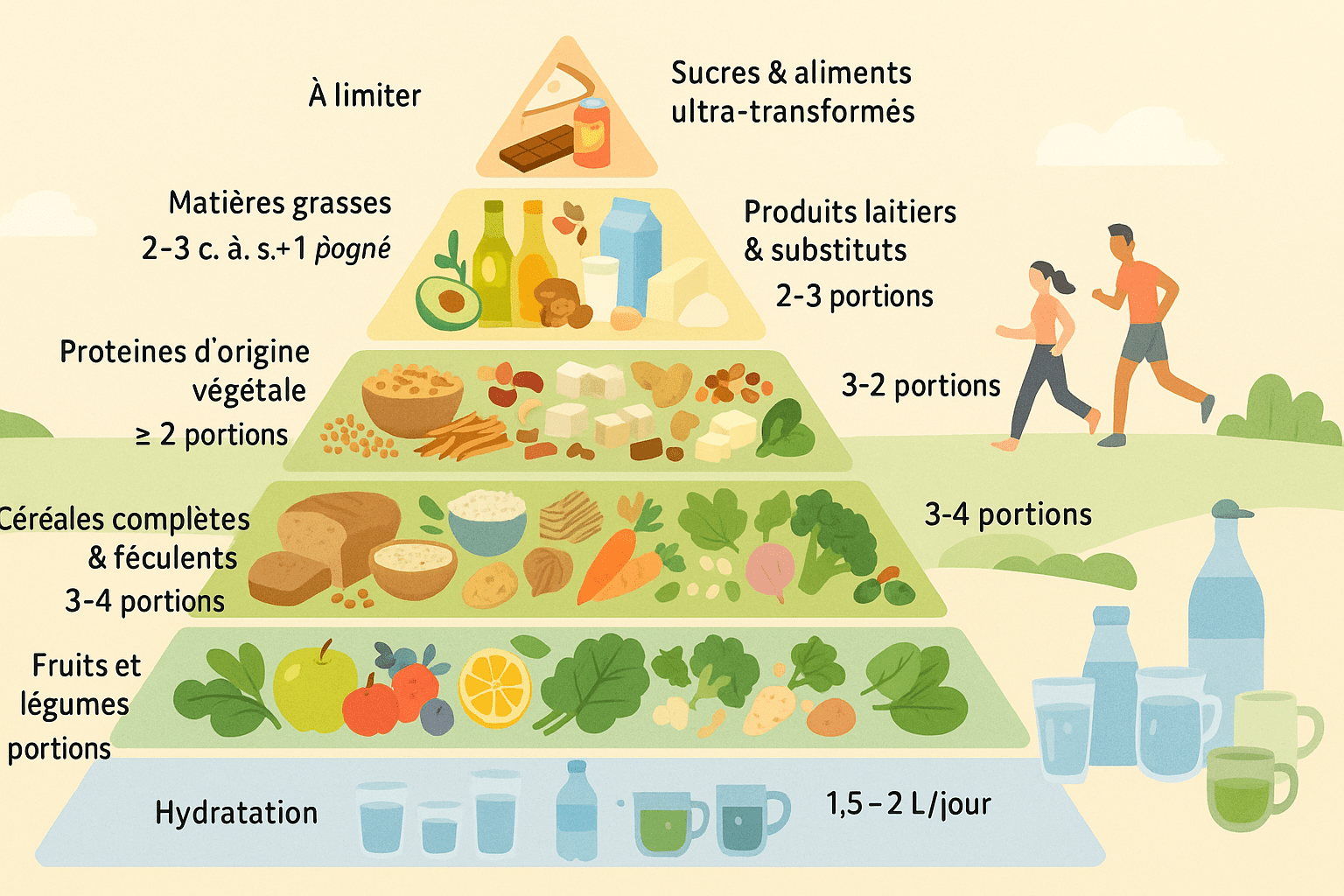
The Vegetarian Food Pyramid Explained in Images
The food pyramid gives you a quick picture of the proportions in a balanced diet. For vegetarians, a few adjustments are enough to cover protein, iron, calcium, and vitamin B12. This article walks through each level of the pyramid, replaces vague phrases with concrete figures from the WHO and the NHS, and clears up a stubborn myth about protein along the way.
The short version
- The base stays the same: water and minimally processed plant foods. The WHO recommends at least 400 g of fruit and vegetables a day from age 10, plus at least 25 g of fibre.
- Carbohydrates should supply roughly 45 to 75% of energy, mostly from whole grains and legumes; fats between 15 and 30%, favouring unsaturated over saturated.
- You do not need to combine grains and legumes in the same meal. A varied diet across the day covers all nine essential amino acids.
- Only one nutrient is genuinely missing in a reliable form from plants: vitamin B12. Vegans must supplement or eat fortified foods.
- Free sugars should stay under 10% of energy (about 50 g a day) and salt under 5 g a day.
What is the Vegetarian Food Pyramid?
The vegetarian food pyramid is a visual tool that ranks foods by the proportion they should take up in a diet with no meat or fish. It comes in variants: the lacto-ovo version includes eggs and dairy, the vegan version leaves them out entirely.
From bottom to top, each level signals a frequency of use:
- Foods to eat generously and daily (water, fruit, vegetables, whole grains).
- Foods to eat in moderation (dairy or plant-based equivalents, fats).
- Foods to limit (sweets, sugary drinks, ultra-processed products).
The pyramid’s value is educational: it turns nutrition guidelines into proportions that are easy to remember. It does not replace individual advice, but it gives a solid frame for building meals over time.
Why is it useful for vegetarians?
Removing meat and fish mainly changes how you get a handful of specific nutrients. The points health authorities flag are:
- Protein and the balance of essential amino acids.
- Iron, whose stores are often lower in vegetarians (NHS).
- Vitamin B12, absent from plants in any reliable form.
- Calcium, especially if you exclude dairy.
- Long-chain omega-3s (EPA and DHA), which the body makes poorly from plant sources.
The pyramid answers these points by giving a clear place to legumes, nuts and seeds, and fortified products. Built well, a vegetarian plate covers every need. Our complete guide to plant proteins breaks down portions by food.
The Different Levels of the Pyramid
1. Hydration: Water and Unsweetened Beverages
At the base are water and unsweetened drinks. The body needs enough hydration to regulate temperature, carry nutrients, and remove waste.
The usual advice of 1.5 to 2 litres of fluid a day is a starting point that varies with size, activity, and temperature. Still or sparkling water, herbal tea, and unsweetened tea all count. Fruit juices, even 100% pure, are concentrated in sugar: the WHO recommends keeping free sugars below 10% of energy intake, about 50 g a day. An occasional glass of juice fits that budget; a litre a day does not.
2. Fruits and Vegetables
The second level is fruit and vegetables, rich in vitamins, minerals, fibre, and protective compounds. Rather than the vague “five a day,” the WHO sets a concrete target: at least 400 g of fruit and vegetables per day for anyone over 10, with smaller amounts for younger children. This intake helps lower the risk of noncommunicable diseases and moves you toward the recommended 25 g of daily fibre.
Some practical ways to get there:
- Add vegetables to sauces, soups, and pasta dishes.
- Keep fruit within reach for snacks.
- Favour seasonal produce, which is tastier and often cheaper.
- Vary the colours: leafy greens, root vegetables, peppers and carrots, berries, citrus.
How you cook them matters as much as the amount: our article on vegetable cooking techniques compares steaming, roasting, and boiling for nutrient retention.
3. Whole Grains and Starches
Whole grains and starches (pasta, rice, quinoa, whole grain bread, oats) supply most of the day’s energy. The WHO places carbohydrates around 45 to 75% of total energy, mostly from whole grains, vegetables, fruit, and legumes rather than refined sugars.
When you drop meat, it is tempting to load up on starches to feel full. Quality matters more:
- Whole versions give more fibre, which supports satiety and gut health.
- They contain more B vitamins and minerals than refined versions.
- Their lower glycaemic index limits blood sugar spikes.
Aim for varied grains each day: whole wheat, rye, spelt, brown rice, quinoa, millet. Potatoes, sweet potatoes, and chestnuts belong here too.
4. Plant-Based Proteins
Many people still tie protein to meat. Yet legumes, nuts, seeds, and soy products cover the need easily:
- Legumes (lentils, chickpeas, beans, fava beans, peas) provide protein, fibre, iron, and magnesium.
- Nuts and seeds (almonds, hazelnuts, sunflower or pumpkin seeds) offer protein, unsaturated fats, and micronutrients.
- Tofu, tempeh, and seitan add variety; pea or hemp protein powders stay optional, mostly useful for athletes.
One point deserves correction. For years, people claimed you had to combine grains and legumes in the same meal to get a “complete” protein. That rule, popularised in the 1970s, has since been revised. The complementing does not need to happen at every meal: as long as the diet is varied and meets calorie needs, the body has all nine essential amino acids (histidine, isoleucine, leucine, lysine, methionine, phenylalanine, threonine, tryptophan, and valine). Legumes run a little low in methionine, grains in lysine, but the mix balances out naturally over the day. Our plant protein guide develops these pairings.
5. Dairy Products and Substitutes
For lacto-ovo vegetarians, dairy and eggs provide protein, calcium, zinc, and vitamin B12. A few pointers to avoid excess saturated fat:
- Limit the fattiest cheeses and alternate milk types.
- Choose plain yogurt over sweetened versions.
- Round things out with plant drinks fortified with calcium and B12.
A note on calcium: the intestine absorbs only about a third of the calcium you eat, and that share depends on the food. The calcium in spinach or chard, high in oxalates, is poorly available, while the calcium in kale, broccoli, calcium-set tofu, and fortified plant drinks is far better absorbed. For a vegan, these fortified sources become the backbone of calcium and B12 intake.
6. Fats
Fats sit high on the pyramid. They are calorie-dense but essential: they supply essential fatty acids and help absorb fat-soluble vitamins. The WHO suggests fat make up 15 to 30% of energy in adults, replacing saturated fat with unsaturated fat from plant sources wherever possible.
Favour:
- Good vegetable oils: olive, canola, flaxseed, walnut, hemp.
- Margarines free of trans fats.
- Avocado and whole nuts.
Two or three tablespoons of oil a day are usually enough.
7. Sugars and Ultra-Processed Foods
At the top are the foods to limit: sweets, sodas, industrial biscuits, chips, and ready meals high in salt, sugar, and additives. The WHO keeps free sugars under 10% of energy (ideally under 5%) and salt under 5 g a day.
Occasional treats are fine. Cooking at home is the best lever: baking your own cake lets you control the sugar and add whole flours. Watch out in particular for industrial meat substitutes, sometimes very salty and processed; reading the label avoids surprises.
How to Balance Meals Daily?
- Plan your menus. Spread the main food families across each day and prepare varied meals over several days. Vegetarian batch cooking helps you hit these targets without spending every evening in the kitchen.
- Mind your portions. Lean on WHO targets (400 g of fruit and vegetables, 25 g of fibre) rather than rough guesses, and adjust for your activity level.
- Vary cooking methods. Alternate steaming, roasting, and pan-frying to preserve nutrients without piling on fat.
- Respect your budget. Legumes, grains, and seasonal vegetables are affordable; freeze your surplus.
- Supplement when needed. B12 is essential for vegans. For iron, pair a source of vitamin C, as our article on plant-based iron explains.
Example of a Daily Menu
- Breakfast: oatmeal with a calcium- and B12-fortified plant drink, nuts, chia seeds, and berries; tea or unsweetened herbal tea. More ideas in our article on protein breakfasts without eggs.
- Lunch: green lentil salad with cherry tomatoes, cucumber, and avocado, olive oil and lemon dressing; whole grain bread; plain or plant-based yogurt with fruit.
- Snack: a seasonal fruit or a spinach-cucumber-apple smoothie.
- Dinner: chickpea and vegetable curry with brown rice; a piece of cheese or grilled tofu; unsweetened compote.
Key Nutrients to Monitor
- Protein: legumes, nuts and seeds, and soy products spread across the day are enough, with no need to obsess over combining at each meal.
- Vitamin B12: it is made only by bacteria and archaea, and plants do not produce a reliable form. Neither spirulina nor seaweed replaces a safe source. Vegans must supplement or eat fortified foods. See our dossier on vitamin B12.
- Iron: plant (non-heme) iron is absorbed less well than animal iron. Vitamin C clearly improves its uptake within a meal, while tea and coffee at the table hinder it.
- Calcium: favour well-absorbed sources (calcium-set tofu, fortified drinks, kale, broccoli) over oxalate-rich spinach.
- Omega-3: flaxseed, chia, and walnuts supply alpha-linolenic acid (ALA). The body converts it to EPA and DHA with an efficiency below 5%, which is why an algae supplement helps vegans.
- Zinc: found in legumes, seeds, and whole grains; soaking and fermentation improve its availability.
Common Mistakes to Avoid
- Too little protein. Skipping legumes day after day eventually shows up in energy and muscle.
- Too many ultra-processed products. Many ready-made substitutes are salty and fatty. Read the labels.
- Falling back on starches. Piling up pasta and bread without legumes or vegetables unbalances the plate.
- Lacking variety. Alternating grains, legumes, and vegetables of different colours covers a wider range of micronutrients.
- Neglecting B12. It is the one supplement that is genuinely unavoidable on a vegan diet.
Lifestyle: Beyond the Plate
The pyramid does not do everything. Regular physical activity supports heart and bone health. Enough sleep regulates appetite. And an occasional blood test (iron, ferritin, B12) lets you adjust your diet or supplements instead of guessing.
Frequently Asked Questions
Do I really need to pair rice and lentils in the same meal? No. That is a 1970s rule that has been revised. As long as your diet is varied across the day and meets your calorie needs, you get all nine essential amino acids without combining proteins at every meal.
How much fruit and vegetables per day? The WHO recommends at least 400 g a day from age 10. In practice, that is about five portions spread across the day.
Does a vegetarian who eats eggs and cheese need a B12 supplement? Dairy and eggs provide B12, so a lacto-ovo vegetarian who eats them regularly often covers their needs. The supplement becomes essential for vegans, who have no animal source.
Can spirulina replace B12? No. Spirulina mainly contains a pseudovitamin B12 with no activity in humans. It should never be your only source of B12.
Can children and pregnant women follow this model? A well-planned vegetarian diet suits these life stages, but the NHS stresses caution around iron and B12 during pregnancy and breastfeeding. Medical follow-up is recommended in those cases.
Sources
- World Health Organization, Healthy diet (400 g of fruit and vegetables, 25 g of fibre, free sugars < 10%, salt < 5 g, fat 15-30%, carbohydrates 45-75%).
- NHS, The vegetarian diet (lower iron stores, vitamin C, calcium, B12, pregnancy).
- Wikipedia, Complete protein and Essential amino acid (same-meal combining myth, nine essential amino acids).
- Wikipedia, Vitamin B12 (made by bacteria and archaea, absent from plants in a reliable form).
- Wikipedia, Omega-3 fatty acid (ALA to EPA/DHA conversion below 5%) and Calcium (about one-third absorbed, oxalates).